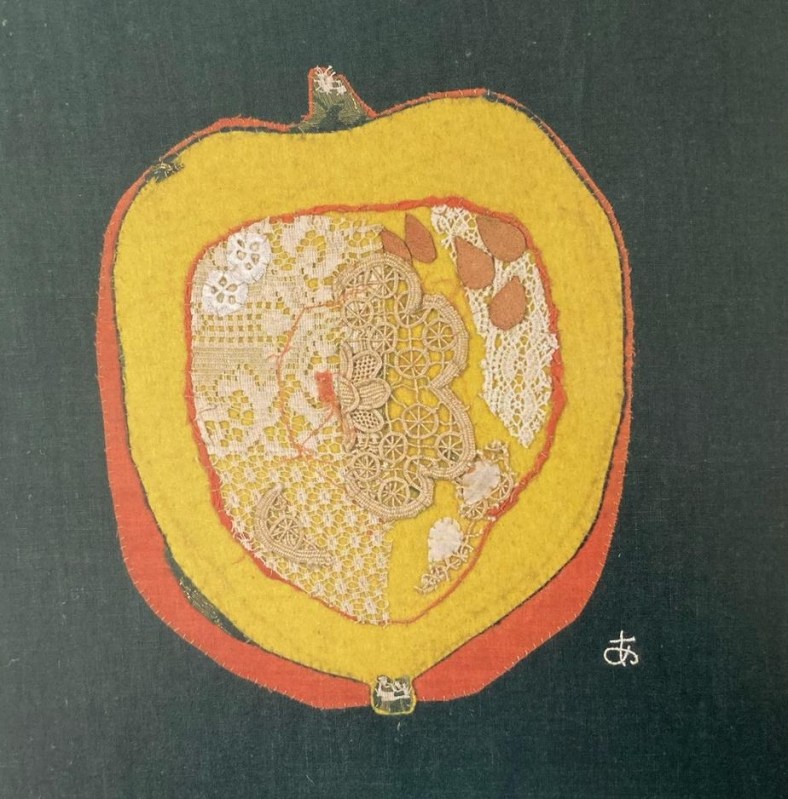
Nuno-e‘, literally ’fabric images », are the works that Ayako Miyawaki brought to life from the age of 40. A self-taught artist born in Tokyo in 1905 and married to the painter Haru Miyawaki, with whom she moved to Nagoya, Ayako perfected her applied art until her death at the age of 90 in 1995.
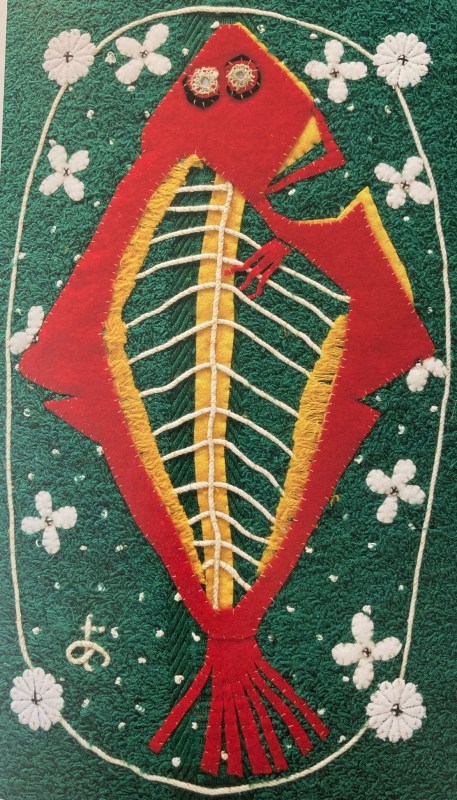
Drawing on her late mother-in-law’s vast stock of fabric coupons, she brought dozens of striking still lifes to life. Pumpkins or pineapples, beans or khakis, flowers of all kinds, fish and prawns: nothing escaped her attentive and sensitive eye. Colours, materials, shapes, the products of nature are magnified by a piece of fabric, there by lace, here by a delicate thread of colour. In these portraits of simple things in nature, one might at first glance read a certain naivety, but that would be to forget all the seriousness and patience Miyawaki has put into observing and studying nature, as his many sketchbooks attest. « Before you start creating, look closely. By doing so, you will realise that we tend to see things in a vague way. You will encounter the unexpected and you will be surprised », she writes in one of them.
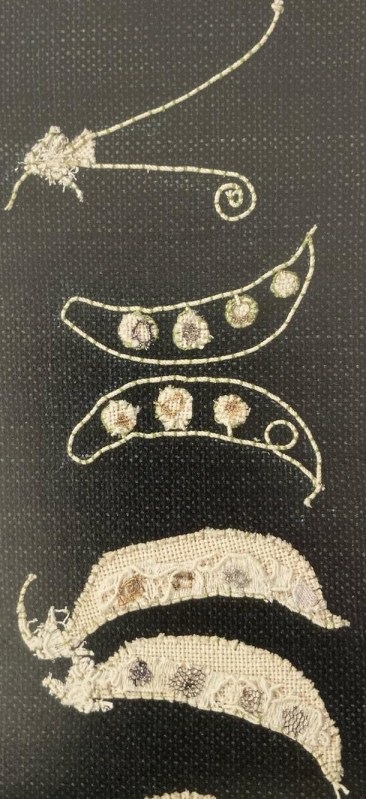
As the years go by, the simplification of the forms becomes more pronounced, evolving towards works in which only the edges of the objects or products of nature are outlined with thread, like a silhouette against an often monochrome background (Peas – see below).
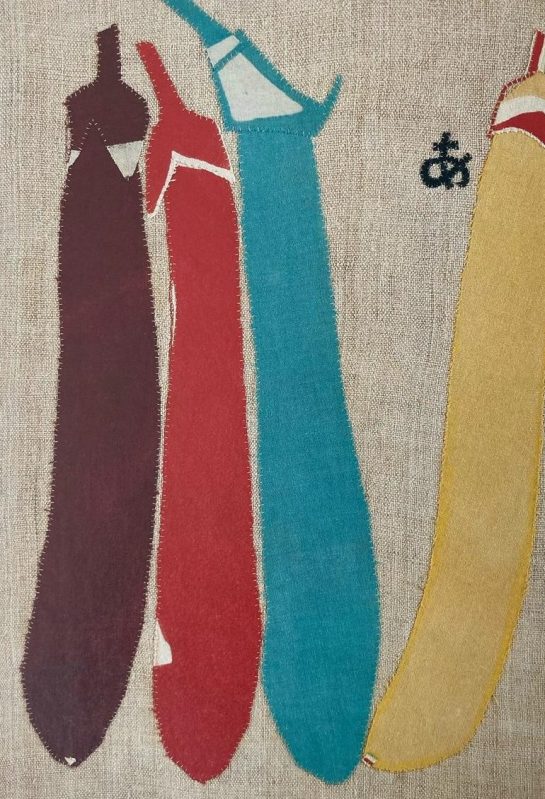
For Ayako, as for the viewer, the unexpected comes from within, from the guts of the fruit and vegetables she is showing us. For, more often than not, they are represented cut up or sliced – their flesh, pulp, heart and seeds are displayed, while fish are reduced to their bones – and it is here that Ayako Miyawaki’s work touches us the most. More than the paper cut-outs of Matisse to which some of her works (such as the colored Eggplants – see below) are reminiscent, more than the scientific and detailed representations of the plates in a botanical encyclopaedia, it is Soutine’s pieces of flayed oxen that her ‘fabric images’ may bring to mind. The comparison may make you smile, so different are the forms, but it is the same curious, obstinate search for what lies hidden inside living things that drives these works.

For more about the artist, read « Miyawaki Ayako: I saw, I cut, I applied » (Tokyo Gallery, January-March 2025)
https://www.ejrcf.or.jp/gallery/english/archive_202501_miyawaki.html
 idl art consulting
Laisser un commentaire