“Japanese ceramics Today – Masterworks from the Kikuchi Collection” – this was the title of a presentation of contemporary creations by Japanese ceramists active in the 1970s-1980s to American and English audiences, testifying to Japan’s present-day creativity in a field too often relegated to the past. Today, almost twenty years after the founder of the Kikuchi Kanjitsu Memorial Tomo Museum in Tokyo, collector and gallery owner Tomo Kikuchi (1923-2016) organized this traveling exhibition in 1983, it is some of these works and many more from the Kikuchi collection that make up the current exhibition1.
Yet there’s nothing outdated about this panorama, which brings together a variety of pieces and techniques and some twenty artists – the topicality of these pieces is striking, their quest to push back the boundaries of ceramic materials and techniques intact. In Japan, the art of ceramic was rediscovered in the wake of the post-war period, thanks in particular to the work of artists’ groups such as Shikokai and Sodeisha in Kyoto in 1947 and 1948.
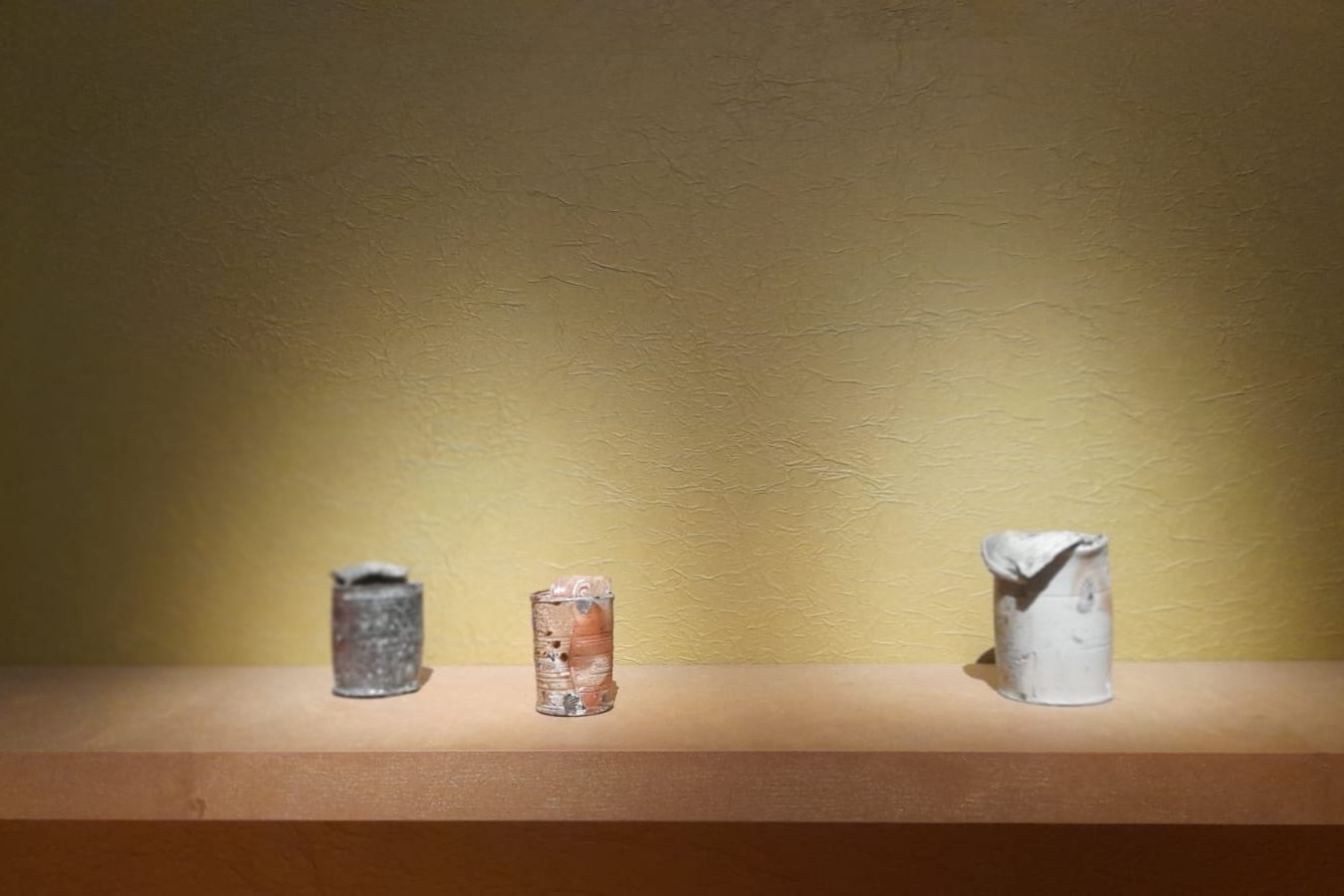
Expression and function – expression or function: the two pillars of terracotta work can combine or exclude each other. The emancipation of the ceramic object to exist for itself beyond its possible utility – from everyday object (yakimono – utilitarian pottery) to work of art (obuje-yaki – ceramic-object) – can be seen in Seimei Tsuji‘s work (1927-2008), who explored with hunour this implicit injunction to ceramic technique to be a container – see his porcelain cans with softened lids, reals trompe l’œil.

(Photographer: TANAKA Gakuji)
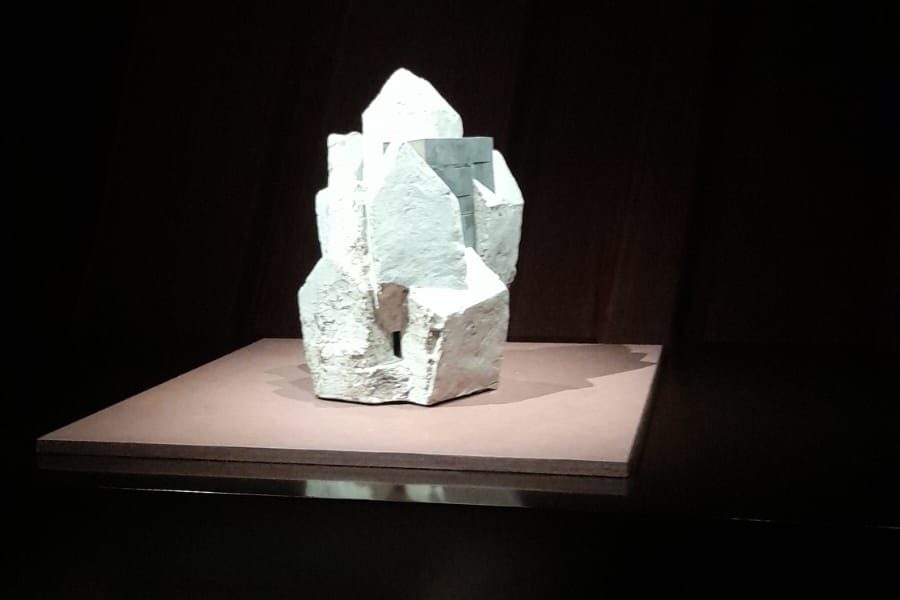
In front of Black Flower by Kazuo Yagi (1918-1979), founder of the Sodeisha movement, it might be hard not to think of the abstract sculpture of Julio Gonzalez (like this Tête de Paysanne, 1934-36, Centre Pompidou, Paris): presented on a plinth, mounted on a stand, the piece of low-fired black kokuko ceramic evokes a bust or a sculpted bronze head. Tsuyoshi Kawasaki (1942-2023), a master in the representation of geometric architecture, also plays with materials in his work. His silhouette of a village clinging to a rocky outcrop gives the impression of having been carved out of a block of limestone.
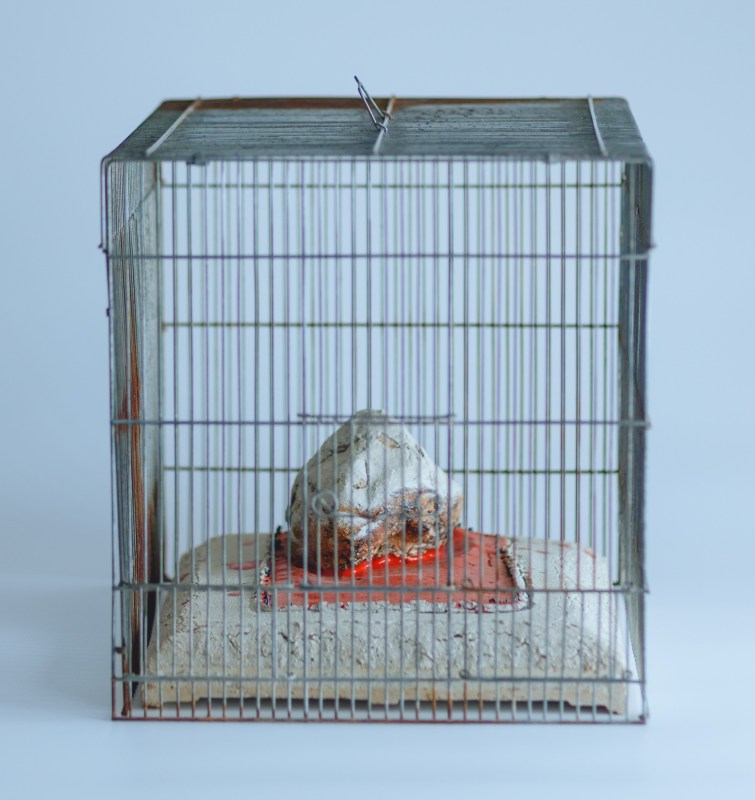
A final word on Ryoji Koie (1938-2020), an artist born and trained in Tokoname (Aichi Prefecture), the oldest and largest of Japan’s six historic pottery centers, who developed a highly personal, quasi-iconoclastic approach to ceramics. His work Evidence, presented in the exhibition, is an intriguing one: behind a tin cage, one can imagine the presence of a bleeding heart.
Many thanks to Anna Iwasaki, Curator at the Tomo Museum for her great help.
Installation views of the exhibition (photos IDL)


- Visit the exhibition at the Tomo Museum, Toranomon, Tokyo, until 6th May 2025 – https://www.musee-tomo.or.jp/ ↩︎
 idl art consulting
Laisser un commentaire